

More trees, more exercise
What a short study says about childhood habits, urban design and green space

This is part of my Nature Deep Dive series in which I unpack the science behind nature connection.
Research is often inaccessible because of jargon and assumptions of prior knowledge. This shouldn’t be the case. Everyone has the right to know what we know. Knowledge is power, after all. AI can’t interpret and contextualise research for you, but I can.
That’s why I read science papers that won’t make it into the media but should, so you don’t have to.
I am currently on maternity leave, so I will be much slower at getting back to your thoughts and comments. Please rest assured that I will get to them eventually, and I will be back soon.
Dear friends,
This month, I’m unpacking a study for you that asks whether green space around a child’s home influences their levels of physical activity.
I know I prefer to go for a run when there’s a lovely environment outside to run through, not just grey, traffic-fume-filled roads, so it seems reasonable to ask whether the same thing applies to children. Obviously, in their case, they are unlikely to be opting to go for a 10km run, and more likely to want to run around with their friends playing football or tag or something similar, but the question of whether or not they are more likely to do this when they live in a greener area remains the same.
And this is an important question to ask in the context of rising sedentary, indoor lifestyles for children and increasing levels of childhood obesity. We can’t expect children to learn how to take care of their physical health as adults if we haven’t helped them discover how to do this growing up.
My piece this month is short and sweet because the paper is short and sweet—seven pages in total, including references:
‘Undeveloped green space and free-time physical activity in 11 to 13-year-old-children’
This study comes from Canada, and I like it because it asks an obviously important question in a straightforward way. It looks at children living in urban areas across Canada, using a pre-existing, large dataset that is representative of the country’s population.
I first came across this paper when I was trying to find evidence to back up the oft-touted claim that children’s ‘home ranges’ have decreased dramatically over the last few decades. This is the area around a child’s home in which they can roam and play outside, unsupervised by adults. It’s the kind of claim that, anecdotally, seems clear, but in practice, it’s very hard to find data for, since no one thought to systematically collect information on how far your granddad used to roam with his friends every Saturday.
What did the researchers do?
The researchers worked with data from the Canadian Health Behavior in School-Aged Children survey, or the Canadian HBSC. This has been running every few years since 1989, in partnership with the World Health Organisation. The fact that these kinds of large, systematic datasets are being quietly amassed fills me with hope that there are people out there asking the right questions.
The Canadian HBSC consists of a questionnaire that children complete in their classroom at school, paired with satellite-based environmental data of the area surrounding their home postal codes, making it absolutely ideal for this study. The researchers had a sample of 5,138 urban-living children to work with, all in grades 6-8, which means they were 11-13 years old.
From here, they drew a circle with a 1km radius around the centre of each child’s home postal code. This represents about a 10-15-minute walk, which research suggests is about the maximum distance children are allowed to travel from home unsupervised. Within this area, the researchers then calculated the proportion of land covered by undeveloped, publicly accessible green space. In practice, this meant excluding any green space that was private, covered by water or developed (meaning parks with some kind of amenities, like football pitches or playgrounds). This left meadows (which they defined as covered by >50% grass and other non-woody plants) and tree-covered areas (land covered by >50% trees and shrubs).
To gauge the children’s physical activity levels, they used responses to one of the questions in the HBSC: ‘Outside school hours: how often do you usually exercise in your free time so much that you get out of breath or sweat?’ The options the children had with which to answer were: ‘Never’, ‘Less than once a month’, ‘Once a month’, ‘Once a week’, ‘2 to 3 times a week’, ‘4 to 6 times a week’ and ‘Every day’.
Very simply, this meant the researchers could examine the data to see if there was a relationship between the type and/or amount of green space around a child’s home and how often they exercised in their free time. In other words, did children who lived near more undeveloped green space exercise more than those who lived near less?
What did they find?
In short, yes, and the type of green space that mattered was trees.
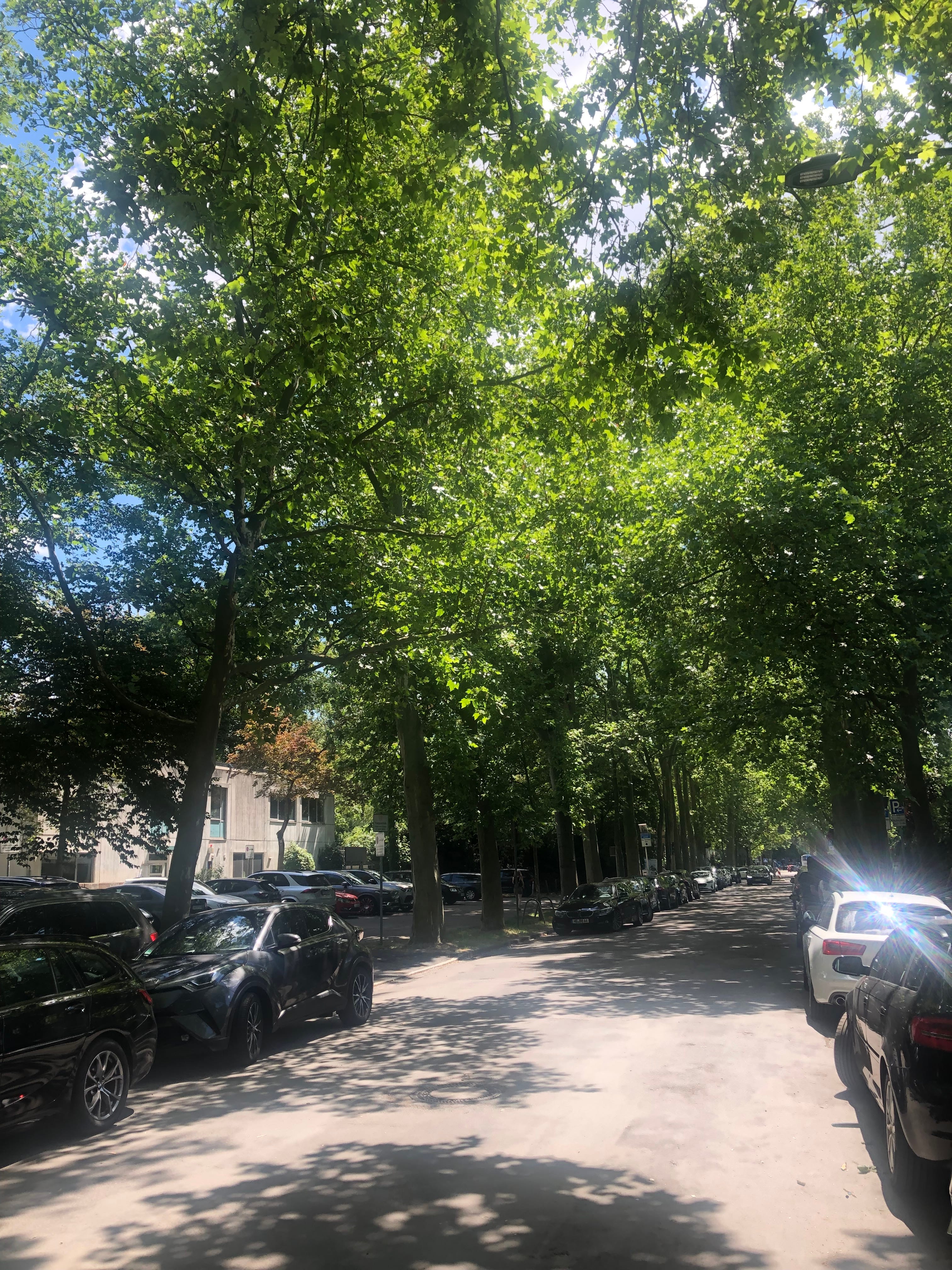
The higher the proportion of a child’s home neighbourhood covered by trees, the more frequently they exercised in their free time. In fact, the researchers’ model suggested that for every extra 5% of a neighbourhood covered by trees, the odds of an increase in children’s physical activity were raised by 5%.
Interestingly though, the same was not true of the proportion of land covered by meadows, which showed no relationship with the amount of children’s physical activity.
Another interesting takeaway from these data is that the less land in a neighbourhood covered by meadows and trees, the more land was covered by developed green space, like parks, and vice versa. So it doesn’t seem to be the case that greener areas are greener in every way.
In terms of the proportion of Canadian urban children who live in neighbourhoods containing these all-important tree-covered spaces, 26% of the children in this study had no tree-covered areas whatsoever within a 1km distance of their home. Only 38% lived in a neighbourhood where at least 5% of the land was tree-covered, and only 23% lived in a neighbourhood where at least 10% of the land was tree-covered. In other words, the majority of Canadian children in urban areas have little to no access to tree-covered spaces within a 10-15-minute walk from their home.
The ‘home range’ of Canadian children hasn’t been measured, but we know from Australia that 53% of 10-12 year-olds are allowed to travel less than 1km from their home unsupervised. This means that, even if children live in an area rich in publicly accessible green space, much of it is, in fact, inaccessible to them in their free time, despite trees clearly being important for exercise and play.
Why do we care?
I think this study matters because it is unique.
There is growing awareness of how urban trees are important for heat regulation in built-up areas and for improving air quality by absorbing pollutants. We see this awareness, and our instinctual preference for green neighbourhoods, reflected by higher house prices in greener areas. And this isn’t just because greener areas are often more affluent and contain better schools, healthcare access and other amenities; it is almost always the case that flats within the same block, or houses on the same estate or road, with views of trees and green space have higher asking and purchase prices than those with less nature-rich views.
But this study chose to look at how urban green space might influence physical activity. What’s particularly surprising to me is how it is tree-covered areas that come out as most important. Maybe this is my adult mindset towards exercise coming through—we tend to want flat, grass-covered areas on which to run, but children have more creative ways of exercising, and for this, clearly trees matter.
Looking back across all the papers I’ve unpacked for this series, it seems that the benefits of urban trees are really starting to stack up (beyond just heat regulation and air quality control): improved recovery rates after surgery, higher test scores for children’s reading, writing and maths, and lower rates of depression diagnoses—and now, higher rates of physical activity for 11 to 13-year-olds.
I find these studies much more meaningful than the ones that quantify temperature difference or air quality between tree-lined and non-tree-lined streets. I think because they get to the heart of why we prefer to live closer to nature.
Don’t get me wrong, having cooler streets with cleaner air is hugely important for public health. But generally, when we go to a house viewing in a nice, leafy neighbourhood, we don’t sigh and say ‘Ah, I am at least 5 degrees cooler and can sense less particulate matter filling my lungs.’ We sigh and say ‘I like it here’, probably because we feel calmer, our minds are less overwhelmed, and we might be more inclined to spend our free time sitting outside or going for a gentle stroll. In other words, we can envision us living our lives here in a more beautiful way.
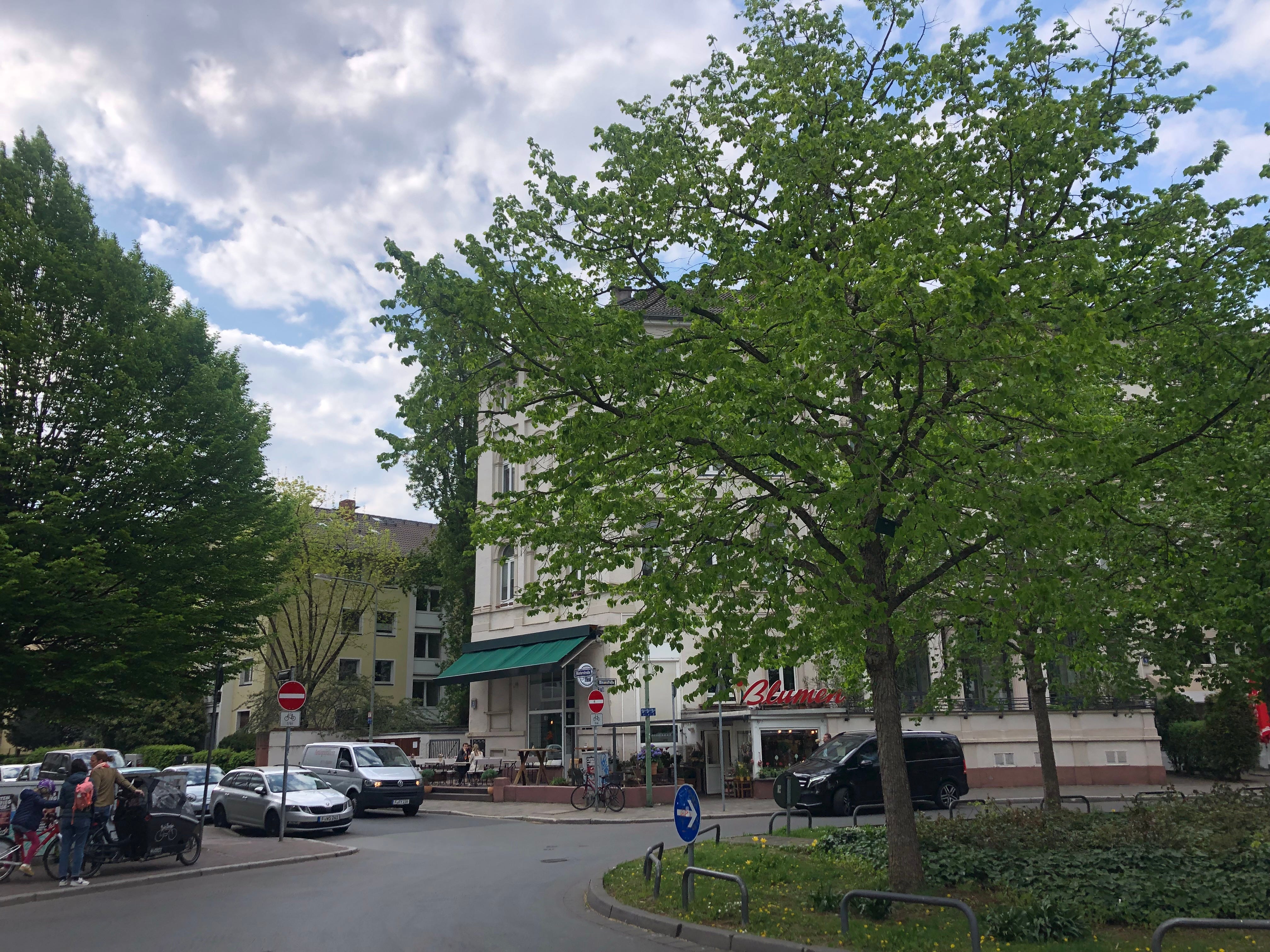
I think, when urban trees are reduced to their numerical effects, as if they are machines we install on pavements like parking ticket machines, we lose so much of why they matter, of why they cause people to behave in different ways and feel different things. Of course, the public health benefits of temperature regulation and air quality control cannot be understated. But I don’t think these are the benefits that compel people to climb their local tree and camp in it to stop it being removed.
This happens because people like trees—they form relationships with them that improve their daily wellbeing and life satisfaction. It’s the emotional arguments that move people to care for urban trees, yet when arguing against decision makers, we tend to resort to sanitised, clinical numbers. But decision makers are people too. They too live on a street somewhere, probably aware that a green street is preferable to a greyer one.
So I think this study matters because it asks how undeveloped urban green space actually affects key behaviours that, in turn, affect our health. And to turn this focus to childhood—such a formative time in all our lives, with huge effects on our health and wellbeing as adults—I think represents welcome, long-term, forward thinking.
Full credit to the authors of this paper: Ian Janssen and Andrei Rosu. If you would like to read the full paper, click here.
If you want to learn more about the science behind why the outside is good for us, would you consider upgrading to paid or buying me a coffee? It allows me to keep writing.

I am currently on maternity leave, so I will be much slower at getting back to your thoughts and comments. Please rest assured that I will get to them eventually, and I will be back soon.
Congratulations, Kate! I hope you’re enjoying your time with family. 🧡 Thank you for this. Trees are so generous and I’m glad people are learning just how much we need them. Just yesterday, a friend sent me this article about a small town in Quebec that passed a resolution to protect trees, which its mayor called “indispensable allies,” as living beings. (Gift link)
https://www.nytimes.com/2026/07/01/world/canada/quebec-trees-rights-canada-terrasse-vaudreuil.html?unlocked_article_code=1.v1A.8L-X.e82GUW3JLrOn&smid=nytcore-ios-share
Brilliant reading.
I loved your approach on how trees make us feel, rather than the cold, factual numbers.
Enjoy your rest!