


Dear friends,
You know how people talk about ‘trips of a lifetime’? The ones that changed them as people? I think it’s vital that everyone has one of these.
I don’t mean a resort-style, tourist-activity-heavy, pricey one. I mean a trip that really shifts perspective.
One that removes us from everything we are taught matters—news cycles, consumption, ourselves. One that places us firmly back where we have all come from—enmeshed within the natural world, subject to its dangers and cognisant of our place as one very small cog in the ecosystem, which is made up of so many.
This, after all, is reality. And it’s a problem that the majority of us never get to experience this.
We pride ourselves on being an intellectual species. But it remains true that the best way to learn something, to really embody an idea, is to experience it.
What shaped me
I want to tell you about my trip of a lifetime.
I travelled to Madagascar when I was 21 for three weeks. I boarded an 11-hour flight from Paris to Antananarivo, Madagascar’s capital, alone. It remains one of the scariest things I’ve ever done. But it’s the scary things that shape us.
The expedition I took part in belonged to a longer-term conservation project, working to get the Mahamavo Forest in northern Madagascar the protection it needs. The task was to survey and record the biodiversity that exists in this tiny pocket of dry, deciduous forest, one of the last of this kind left in the country, and secure it governmental protection from further degradation.
This is all very noble. But the reason the trip has stayed with me is because of the actual experience of existing in this remote place.
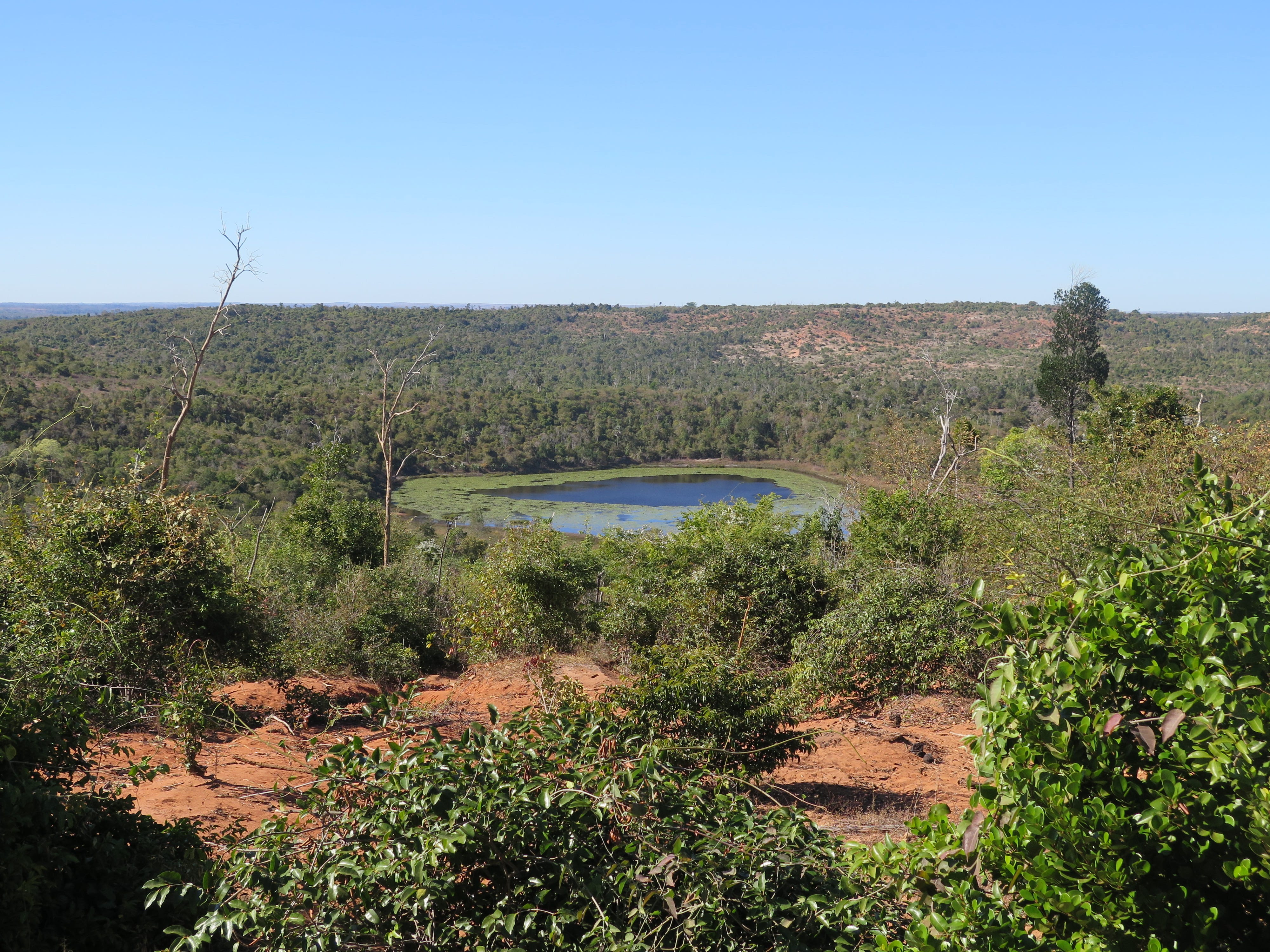
We stayed at a combination of three camps, each one a good day’s trek from the other. None of them had running water or electricity, only a big bulky generator that was switched on for a few hours a day.
Showers were little huts made of grass leaves and tree trunks, with a bucket of cold water to chuck over ourselves. There was absolutely no phone signal or, shock-horror, internet, since we were a six-hour drive from the nearest town—a drive that was not along an actual road but across the actual earth. And this nearest town was a 12-hour drive from Madagascar’s capital city.
Gosh, it was an adventure and a half simply to get there.
The trip permanently shifted my perspective on what really matters, how fragile our environment is, whose Earth we’re really living on and what deforestation actually means.
Let me tell you how.
1. Our human concerns are not what really matter.
It was the summer of 2016—the summer of the UK’s Brexit referendum, when we voted to leave the EU.
The main base camp had a satellite phone. This was powered up once a day to check for any important news from the outside world, which was then relayed to the other two camps if necessary. When the outcome of the Brexit referendum broke through to base camp, it was thought important enough to be radioed through to us.
For several hours, we actually thought those at base camp were playing a prank on us. But, after hearing nothing more several hours later, it started to sink in that it might be real.
We were in such an international environment—the camp being full of people from all over the world—that it felt like the most jarring, insane outcome in the world. I remember those of us who were British starting to cry and looking helplessly at each other, while those of other nationalities hugged us in sympathy.
It was simultaneously a very surreal and very grounding experience.
This was the essence of society—that very basic set-up we were living in right there: tents, buckets of water fetched from the nearby lake while avoiding the crocodiles, beans and rice that fed all of us humans equally, no matter what passport we held. Yet there was everyone back at home obsessing over tiny differences and details in our human-constructed world, while letting the real one further and further degrade.
2. Our environment is fragile.
Since our remote location had no waste disposal system, all our toiletries had to be rigorously checked to make sure they contained nothing environmentally damaging. This seems trivial, but living not 50m away from the small lake that provides you and all your teammates with water, and watching the water from your bucket shower drain straight into that lake, is the perfect way to ram home your effects on the environment.
In just the same way that climbing to the top of a rainforest canopy makes you remember how humid it is, so too does living in these conditions make you remember forever how dependent we are on the natural environment to keep us healthy, and how we are the biggest barrier to this.
Wash with your toxic shampoo if you like, but then you get to watch it drain right into the lake from which you will drink, cook and wash, along with everyone else, and those crocodiles, for the next month. Your choice.
3. This Earth is not ours.
I know that usually when people recall these ‘trips of a lifetime’, they don’t talk about the non-existent amenities and the existential crises they find themselves in. They usually talk about all the beautiful wildlife sightings they enjoyed. Let me oblige.
Being in an area so remote that the wildlife isn’t scared of you is humbling indeed. These animals were not used to humans, so they had not yet learned that we are things to be feared.
This is hopeful and heartbreaking in equal measure. At the same time as wanting to whisper to them ‘It’s okay. We’re not all bad, I promise. It doesn’t have to be this way. We will change.’ You also want to do them a favour and teach them just how fearful they should be of our species, because they would do well to learn it.
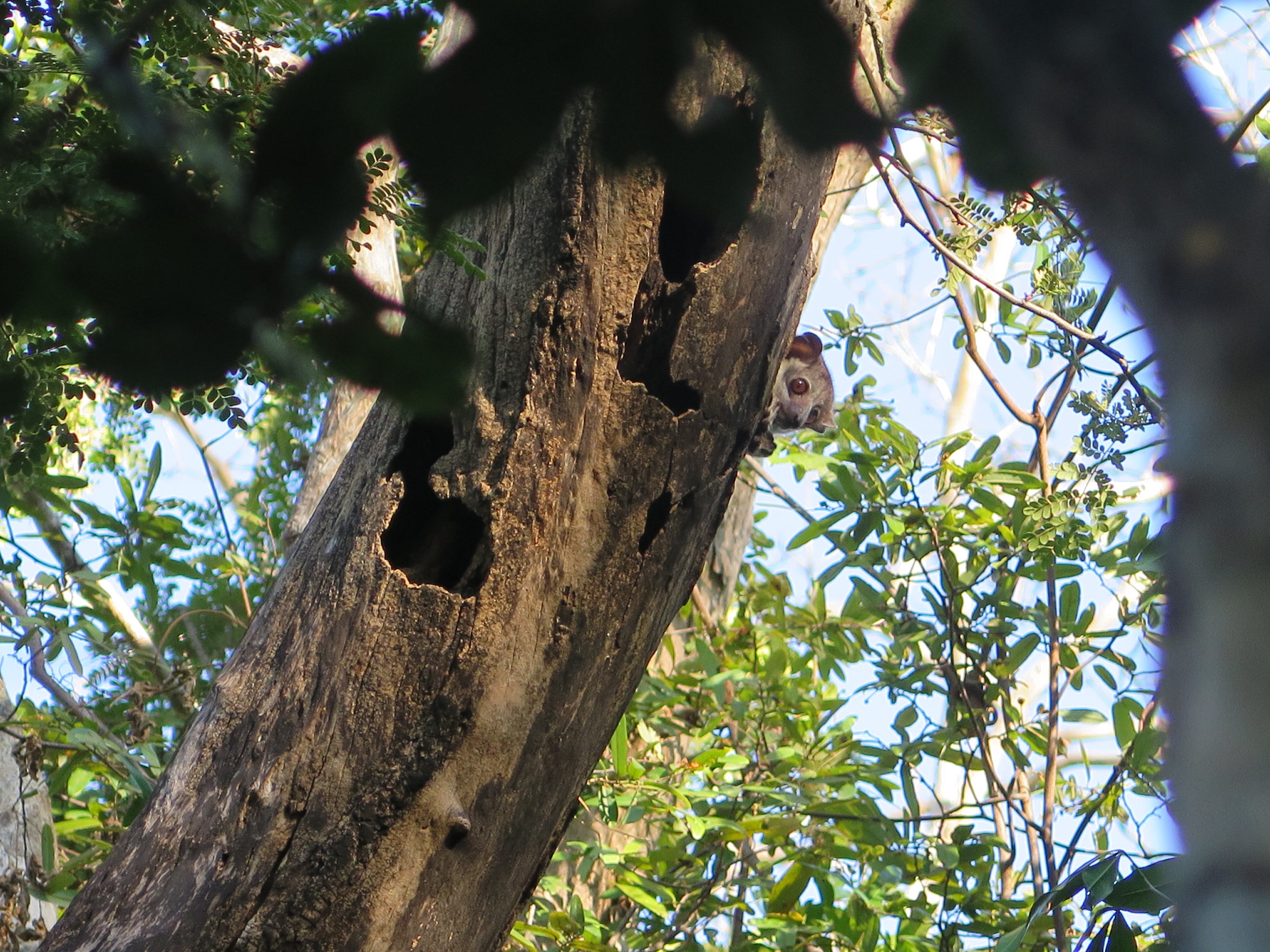
But yes, it’s true that the most magical experiences of my life remain seeing wild lemurs. The first one I saw was a sportive lemur in a tree hole. It remains one of the cutest things I’ve ever seen. These lemurs are nocturnal, and our early morning mammal survey route took us past the base of its tree, from where it sleepily poked its head out to glare at us in half-awake disbelief.
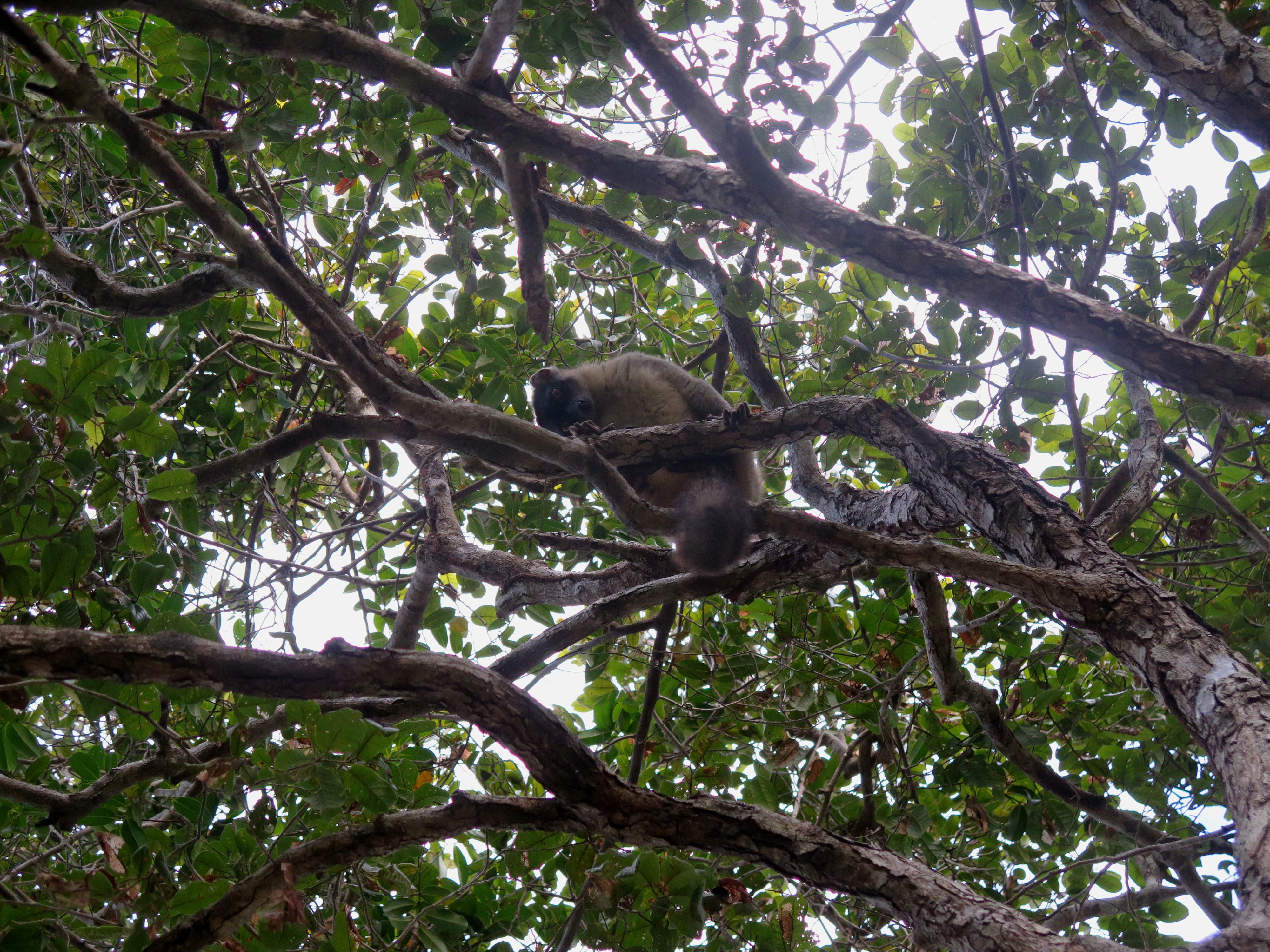
Further into the trip, I was going about my important business on another survey, when I looked up into the trees above me to see a common brown lemur peering back down, just as curious to get a good look at me as I was at it. I had stopped it going about their important business for a magical moment, just as it had done for me.
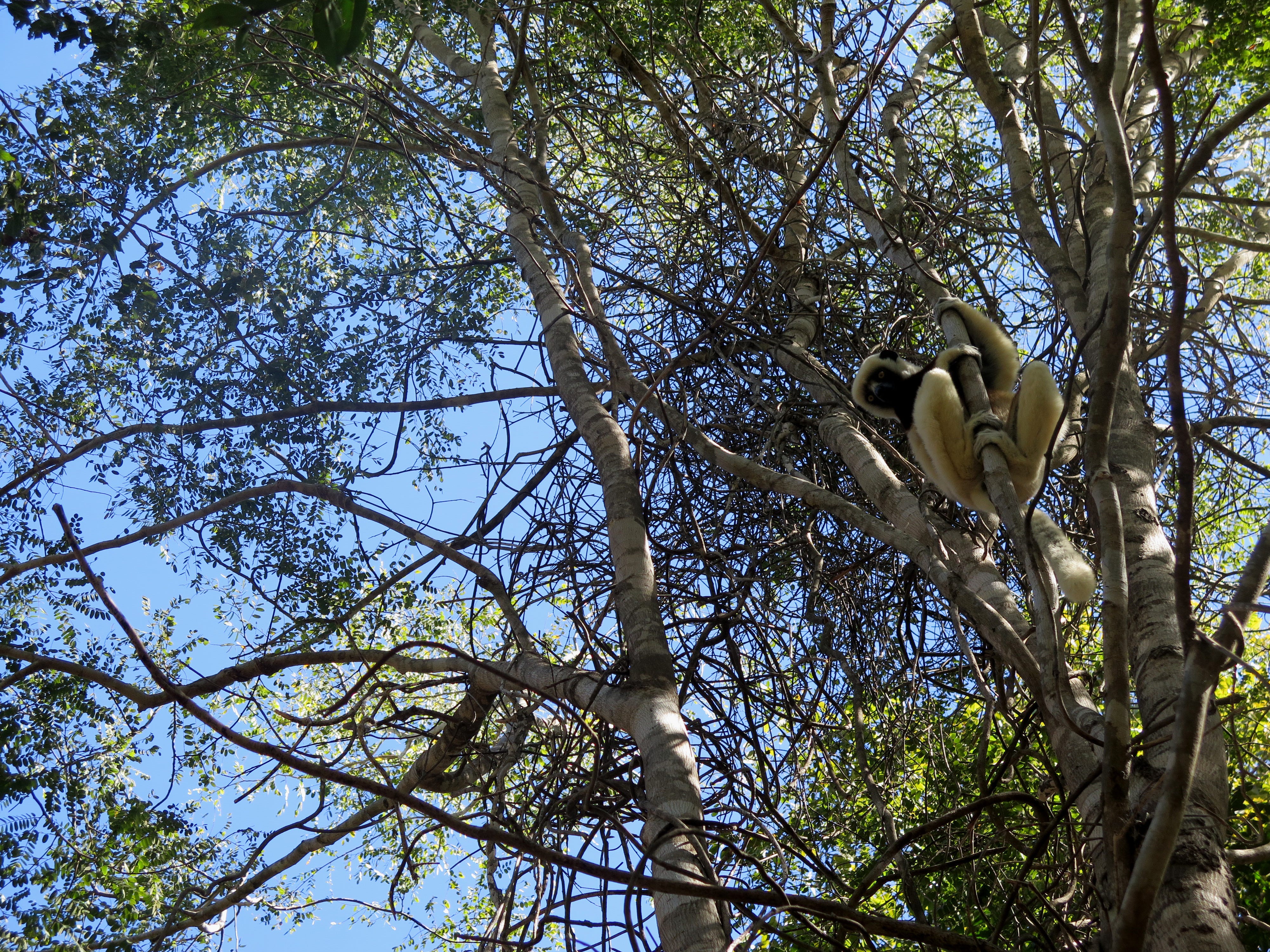
But my favourite encounter of all was with a family of sifakas—the fantastic leaping lemurs that spring from tree to tree—making their way through our camp one afternoon, pausing to look down at these funny long-lost cousins who had turned up in their patch of forest.
And this is exactly the feeling you are left with when you spot wildlife in this truly remote way: we are in their space, not the other way around.
4. Deforestation is really real and really scary.
The final experience I want to dwell on is a sobering one. As well as collecting information on biodiversity, we were also recording deforestation data that would allow us to make an estimate of how at risk this spot was.
To do this, we were doing forest plots. These are randomly chosen locations in a forest that a team return to on several occasions, over a long period of time, to collect the same data.
For us, each plot was 1km by 1km. Our task was to trek out to the exact GPS coordinates, mark out the square, and then set about taking various measurements from all the trees inside that square. As you can imagine, in dense forest, this takes a good while, especially when it is 35-40°C, which it was, every single day.
Fortunately for us though (or unfortunately from a conservation perspective), on one occasion, our group arrived at the GPS coordinates we had been given with great confusion.
There was no forest.
We checked the coordinates several times to make sure we hadn’t made an error, while it slowly dawned on us that the scrub in front of us had been the forest. The last time this particular plot was recorded, just the summer before, it was a dense patch of trees.
After staring in silence for several minutes at the decimated area in front of us, full of tree stumps and not much else, someone asked eerily calmly:
“Well, I guess I’ll just put 0 in all the columns, then?”
Someone else replied ‘Yes’ emotionlessly. And then we trudged back to camp.
This is what deforestation feels like. It looks like zeroes on a datasheet. But it feels like a pit in your stomach.
We can’t just write these learnings in a textbook. We need people to know them.
I wish for everyone to have one of these experiences. (In particular, I would like to arrange one of these trips for every single politician and tech CEO. Not all together, of course, that would defeat the point.)
I think it would make the world a kinder, more sustainable, more understanding place. I know this isn’t practical. If nothing else, the natural world is too vulnerable right now, too existent in fragile pockets, to withstand everyone experiencing this.
For me, this kind of trip truly is a once in a lifetime experience. I don’t want to go back. I mean, I obviously want to go back. I want to live forever in that beautiful remote forest. But I want it to exist free from humans even more.
I’ve had my gem, and I’ve taken my learnings. And what I want to do with them is to spread them to others, so we don’t lose touch with how our human world gets to exist, with the reality of our existence.
Existing on this Earth, alongside its sportive lemurs and crocodiles, alongside its lakes full of water, beneath stars, is a privilege—one we are not so aware of when we exist only in buildings and walk only across concrete.
I obviously can’t send everyone to Madagascar, nor would I want to. But what I can do is share this trip of a lifetime with you all in the hope that we start to rethink what ‘trip of a lifetime’ means, what we want it to mean.
We can’t send our politicians off to remote locations, but we can try to instil these learnings in the next generation.
If you find value in this newsletter each week, would you consider upgrading to paid or buying me a coffee? It allows me to keep writing.
"{After staring in silence for several minutes at the decimated area in front of us, full of tree stumps and not much else, someone asked eerily calmly:
“Well, I guess I’ll just put 0 in all the columns, then?”
Someone else replied ‘Yes’ emotionlessly. And then we trudged back to camp."
... says it all. A good piece, thanks
I hope that if politicians had experiences like this, they would act. However, greed seems to often win. As a forest school leader, I found that a single experience in nature for adults in corporate jobs changed their perspective. However, I think for deeper change more repeated sessions, rooted in community would be needed. Maybe this should be compulsory!