


Dear friends,
It’s happened! All the trees are well and truly neon, cow parsley and blue alkanet are shooting up wherever there is a bare patch of earth, and robins are collecting anything soft and fluffy.
Internally, the baby I spent so many months waiting to feel moving around inside me now regularly gets hiccoughs, peculiarly when I am trying to write, and I often find myself sitting here trying to string a sentence together while attempting to tune out the surreal feeling that a tiny human is actually living inside me. We’re heading to our first antenatal class this evening, and once again it feels as if May has arrived and someone has shifted the gear stick straight from gears two to five in one smooth move.
It’s certainly a wonderful feeling—feeling like you are being swept along as everything comes alive, the evenings grow lighter and warmer, and sunshine feels like less of a rarity and more of a quietly constant reality.
Except—and I don’t mean to ruin this welcome tidal wave—this new-found pace can sometimes feel overwhelming. It’s as if the car is sputtering a bit because there’s some part or other, buried deep within the bonnet, that is a bit old and rusty. So there you are whizzing along in the sunshine with the roof down, but every five minutes or so there’s a noticeable little clunk beneath you that jolts you out of your smooth ride.
This is all very metaphorical. But I can’t think of a gentler way to explain what it feels like to be carrying around the bubbling joy of spring, bouncing through the present and into the future, in the same small tote bag as heavy loss, which drags me backwards even as it heaves itself forwards into my future.
Loss sits there like a giant, rounded pebble, smoothed over by the rush of a gushing river, just weighing my stomach down. Most of the time, I can carry it around inside me, invisible and heavy but still. Yet every so often, this pebble seems magnetised towards reminders that cut straight to the heart of loss, jolting outwards and stopping me in my tracks.
I do so wish these reminders were only the things you might expect—horrible things that make sense when you wince away from them, like hospitals, ambulances, the name of a chemotherapy drug. But this isn’t how memory works.
The most gut-punching of reminders tend to be those that remind me of a perfect spring day that hung peacefully among the chaos: the sound of water gushing down a drainpipe as the person I love took their last shower, while I finished a book outside in the late-April sunshine; the male chaffinch who sang incessantly all May as if nothing were wrong; that magical mixture of the sounds of ducks and geese clamouring for food and children laughing while throwing crumbs as far as they could manage into the water, forming the soundscape to our last ever walk together in the place we loved.
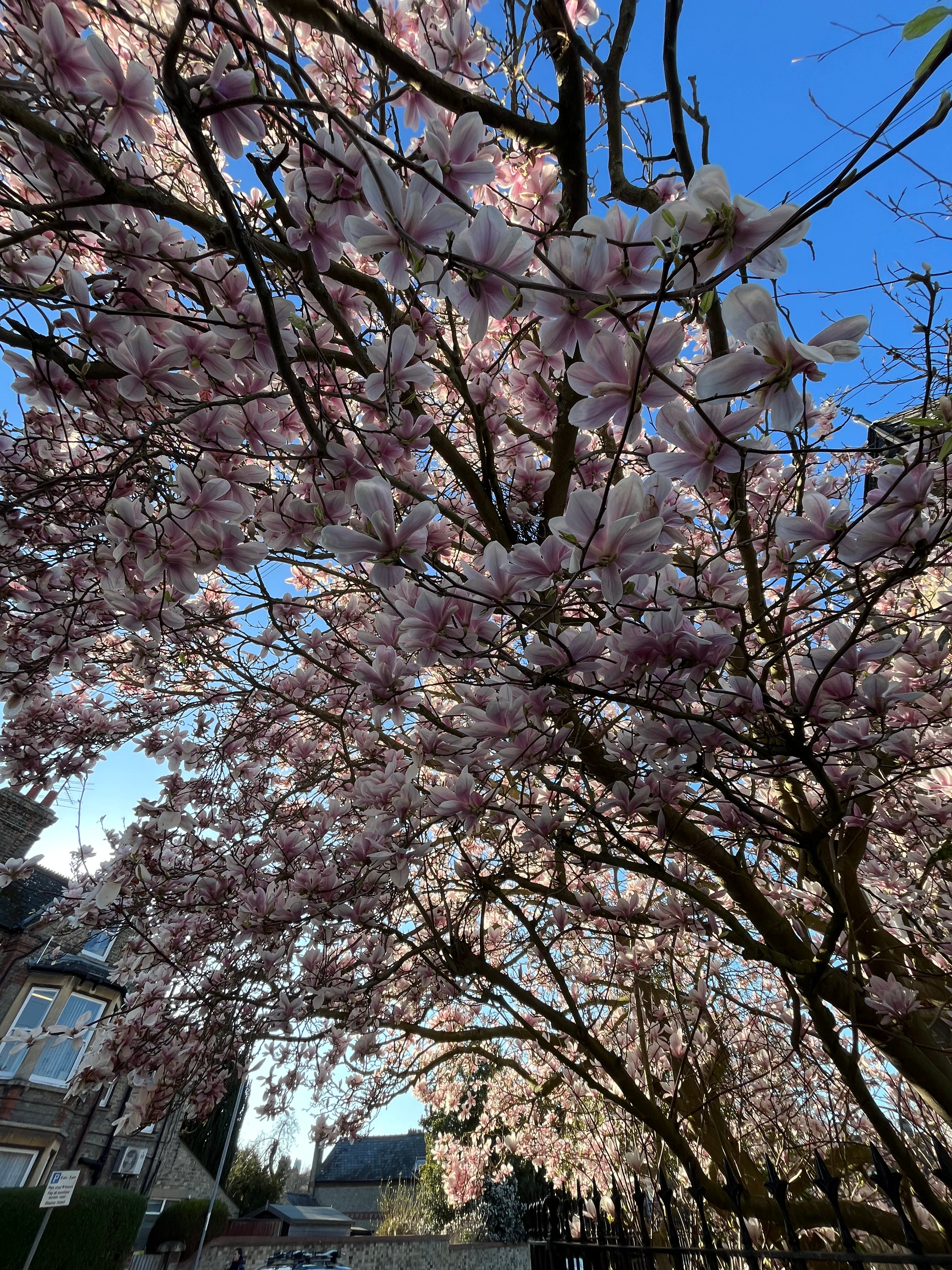
I wrote last year about this feeling around magnolia blossoms—those beautiful, hand-painted, velvety petals that shock me with delight as I round a corner, only to be undercut by the memory of them falling around me as I sat there, stunned and heavy:

The problem is all of these memories are hitting their five-year anniversaries this spring. But they are not fading the way you might expect, the way society presumes they do. They do not get less vivid as they get farther away in time.
On the contrary, new layers get added on top—I will now also remember the magnolia blossoms I must walk under to get to that first antenatal class, the cherry blossom I sat under as I felt my baby’s first hiccoughs. These new layers do not erase the painful ones. They simply pile on top and weave themselves together into one big tapestry of messy, intense feelings that I must somehow find the strength and capacity to hold all at once.
I say all this because people are so quick to assume that, since you’ve got used to carrying this heavy pebble around, your stomach muscles must be strong enough by now, so it doesn’t bother you. They assume that, when good, new things start happening in your life, the big hole left by your person is being filled in, that since your future is looking bright and shiny, the absence of the past no longer matters.
But grief doesn’t work like this. When you lose someone before you imagined you would, every time you move to a new marker in your future, at which you presumed they would be there with you, you find yourself experiencing the loss all over again.
I’d never realised that at each of these life moments—some big, some small—my lost person was stitched into that future with me. So every time I realise anew that they are missing, I feel the rug being ripped out from under me all over again, and I am falling, when all I thought I was doing was buying my baby their first storybook. But suddenly, there I am, flipping from elation at imagining the future in which I turn these pages, to utter heartbreak as I realise I will never see my dad do that with his little grandchild tucked into the crook of his arm.
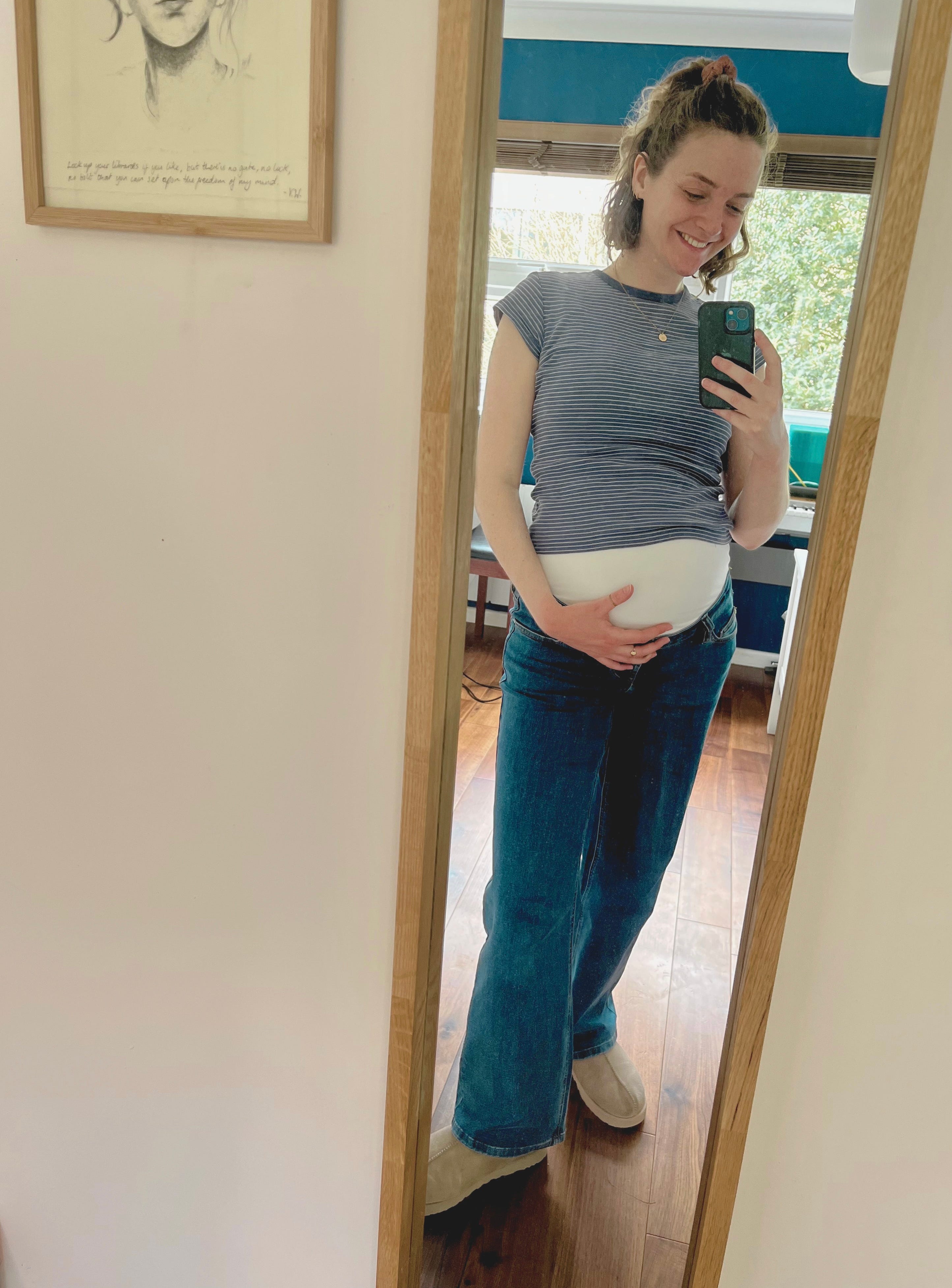
I don’t wish to spoil the welcome current of spring. It is indeed so very, very welcome. But I do wish to point out that it contains multitudes. The contradictions held by a single, soft magnolia petal are so incredibly angular and powerful that they give me whiplash. This hurts at the best of times, let alone when it feels like everyone else is simply able to walk past a magnolia tree unharmed.
I also don’t wish for spring to return to its previous simplicity. The fact that it holds these multitudes means it also holds my loss. As painful as this can be when I have no say over when and how it strikes, this is the only way in which our relationship continues to exist. Our lost people may not be stitched into our future in the way we had planned and wanted, but the repeated encountering of new dimensions of loss is the closest thing to bumping into them as we round a street corner.
I only wish this experience felt less insular, less esoteric. Grief feels heavy enough to carry as it is, so the sense that no one else can even see this huge great pebble you are lugging around, which every so often jumps about inside you and makes you wince, merely adds insult to injury.
Yet grief is not rare—so many of us, most of us even, will carry it at some point. So my conjuring up these complicated metaphors marks my attempt to improve its visibility, in the hope that it either helps you feel seen or that it helps you understand.

I wrote a poem a few weeks back in which I tried to capture this feeling, when I rounded a street corner to encounter a toddler going for a stroll with their grandparent past a buddleja bush:
Last rose

If missing you were as simple
As grieving what we had,
Like a day glowing gold in memory
Heart sinking as I turn out the light
Since it is no longer real
Exists only behind closed eyelids,
It would be a simple heartbreak

But missing you is every day
Having to reimagine my future
Reconfiguring the tomorrow I had built
With you in it
Threaded through like a red blanket stitch
Holding together the squares of a quilt
In which my life once rested

Each time I tackle a new day
I round the corner
I bump into your absence afresh
I realise the lack of you hangs somewhere new
I had not yet looked
I catch my knife-edged breath
As the red thread unravels yet another patch

I scramble desperately to catch it
In my clumsy palms
To keep from losing it
As it flutters away from me
I thought this quilt would hold me forever
Hold us entwined in a shared future
We did not have to work to imagine

But now it lies in tatters
And I must set to work
Again
Reimagining a new patch to fill the gap
One day, with so many new patches
It will no longer be the same quilt
My heart splits into shards

I do not want to reexperience
Your absence anew
Every time I live
It hurts
A wrenching, twisting agony
Of conjuring a new future
In which the lack of you grows only larger

The more I fill it with moments
In which I will need you again and again
I need you to catch me in all the newness
Of every rounded corner
But instead again and again
I am falling
With no quilt to cushion the drop

People think grief is missing what has gone
But that is easy
This is remembering
Grief is losing them again and again
From a future in which you were
Supposed to be stitched together
Having to sew over the holes and tears

That no one else sees
I wish missing you were as easy
As pining after the last picnic of a long summer
Longing after the last swift to screech across the sky
Watching the final rose
Drop to the ground
But missing you feels like

Having to pump blood
Around my hungry body
With my bare hands
When someone has ripped my heart out
But no one can see it is missing
I did not plan to live the rest of my life
With no heart

But each time my world gains a new dimension
One that grows and stretches away
From the fold of time in which our last conversation is cradled
I realise there is a whole new dimension
From which you are missing
In which there has been no peaceful fall of the last rose
But a decimated rose garden
That has lain in ruins behind my back
All along

I wish someone would show me
All the places from which you are missing
All at once
Having to discover them
Drip by drip
When I least expect it
Ekes out your loss and my heartache

But then I would not be able
To meet you again and again
Around each corner
Because every time I feel myself falling
Realising in horror you are not there to catch me
I feel your absence
Which is the closest thing to you

Since the rose garden is wrecked
Beyond blooming again next summer
In the way we had planned
I can be more honest
With myself
If I let myself
Look over its wreckage

It is a shame the garden
Could not turn out the way we wanted
But I would prefer to feel
Its thorns in a mess of brambles
Creeping round my ankles
Than pretend this rose garden
Was never planned in the first place
If you find value in this newsletter each week, would you consider upgrading to paid or buying me a coffee? It allows me to keep writing.
Kate, I really feel your weighing of a simple loss, experienced once then left behind, against the gnawing pain that is always just beneath the surface. I also keep choosing the second of these, despite it being the hardest by far. As you say, this is how those we love stay with us in the now and into our futures, dynamic parts of new feelings and thoughts rather than contained by memories only. But as you also say, the price is high. I think of your pebble lying quietly beside your growing baby. Take care, and thank you for this tender, poignant piece. I will return to your poem many times.
What a lovely reflection, and seemingly fitting to address loss and grief amidst the simultaneous budding of spring and life. It all exists, together. Many heartfelt congratulations to you on your own growing pebble, and much love for the loss of a rock in your life. xoxo