

Why do we point when we see something beautiful?
Our desire to share what we see may be older than humanity itself

Dear friends,
This week, I’d like to talk to you about something very basic indeed: pointing.
Yes, there’s the obvious kind—when we want something or are trying to direct someone towards something in particular: ‘Please bring me that glass of water’ or ‘…that book to your left.’
But then there’s this other kind, the kind that seems bizarrely pointless (ha)—the kind we use simply to draw someone else’s attention to something interesting we’ve spotted. We don’t expect anything from this interaction, we don’t need anything, we merely find ourselves instinctively pointing at a thing because we want to share our view of the world with someone else: ‘Oh wow. Look at that leaf. What a funny shape.’ That kind of thing.
Let me show you what I mean.
The other day, I was enjoying a gentle walk in the sunshine. It’s that perfectly lovely time of year here in the UK when the sun feels so delicately warming on our skin, but we do definitely still need a light jacket—the level of warmth that makes us close our eyes and turn our faces to the sun just to feel its rays bounce across the surface of our eyelids.
At the time, I was clutching a hot coffee in one hand and a freshly baked, still-warm pastry in a paper bag in the other—a combination that never fails to make me feel like I am rich beyond words, especially when it’s sunny and the daffodils are dancing. Out of nowhere, my gaze was caught by a flash of neon yellow flapping somewhat haphazardly across a nearby flowerbed, awash with grape hyacinths, jonquils and blue alkanet.
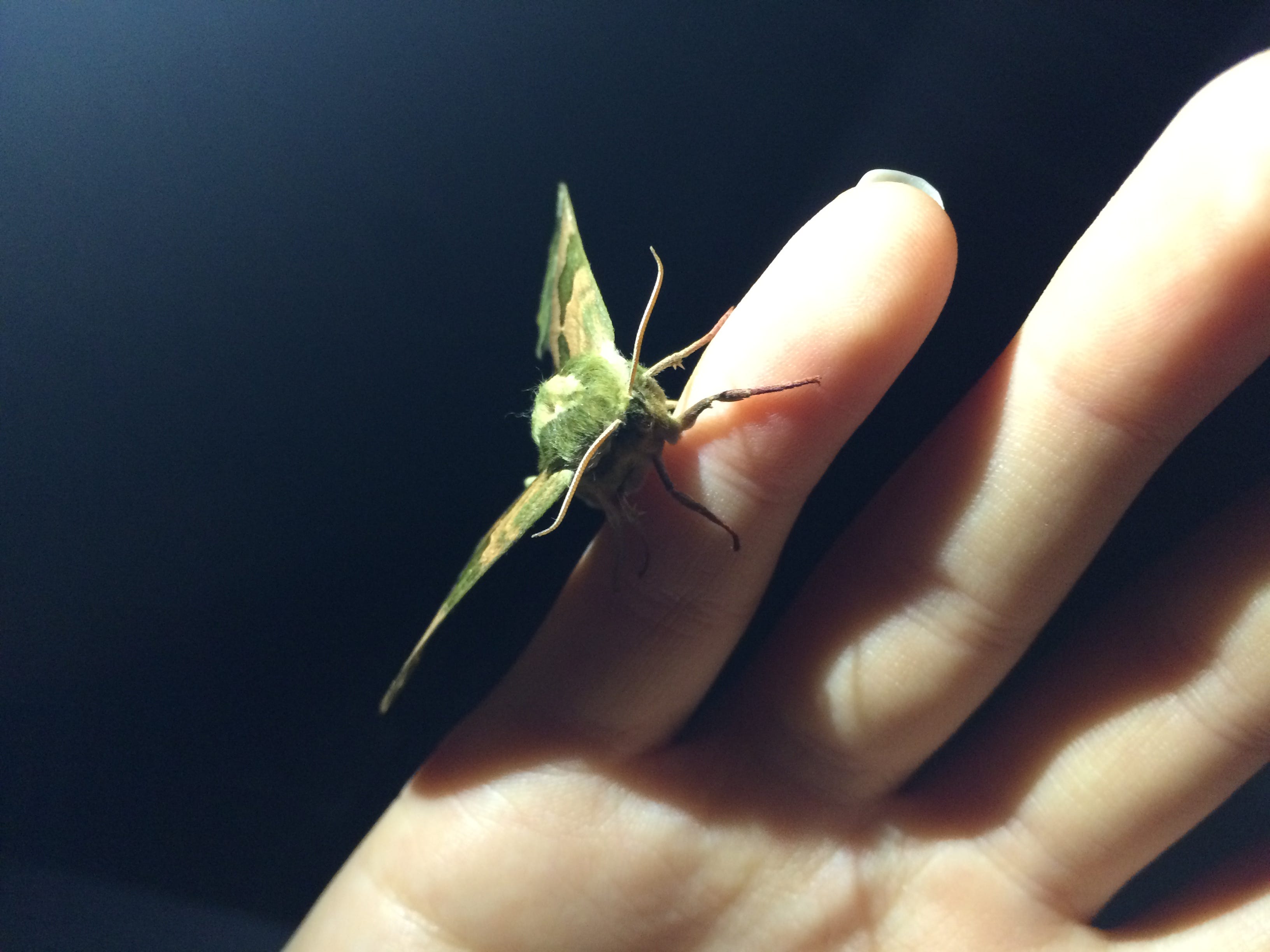
In the UK, this distinctive fluttering of yellow is a brimstone butterfly, and it means only one thing—spring. Immediately, and without thinking, my face broke into a wide smile, and I found my left arm flying upwards to point out this little brimstone. So instinctive was this, that I actually snapped my hand into a point with my index finger, almost dropping my precious pastry in the process, and then I went to catch it with my other hand that was still holding the coffee.
Do not fear. This story has a happy ending. The pastry did not quite slip out of my grasp, only the smallest drop of coffee was spilled, and the brimstone butterfly remained unperturbed to continue his flowerbed patrol.
But so strong was that impulse of needing to share this joyful dash of flapping yellow, simply for sharing’s sake, that my hands had actually forgotten what they were already doing.
I’ve always been fascinated by human behaviour, by which I really mean primate behaviour, of which humans are just one kind, so much so that I did a master’s degree in human evolution and behaviour just so that I could fulfil my little dream of watching some species of monkeys or apes all day in the name of science. So this is not the first time I’ve considered our strangely human propensity to point.
Plenty of other animals can understand our pointing—dogs, wolves, elephants, dolphins, sea lions, horses, pigs, goats, even cats (when they want to…).
But the only other animals that point at things themselves are chimpanzees and bonobos (our closest living relatives), gorillas, orangutans, rhesus macaques, Japanese macaques and capuchin monkeys. As you can see, pointing is quite limited across the vast animal kingdom.
Crucially though, until very recently indeed, all examples we had of other primates pointing were to request something they or another individual wanted. It was thought that our capacity to point at something simply for sharing’s sake was uniquely human. It’s something very young humans start to do before they even reach a year old—simply wanting to direct someone else’s attention at something they themselves have seen.
But, in 2022, wild chimpanzees were caught on camera doing the exact same thing. An adult chimpanzee was spotted pointing at a leaf simply because she wanted her mother to join her in looking at it. Incredible!
What is the first thing you generally say when you spot something outside in nature? I’d wager it’s one of fairly few options: ‘Wow’, ‘Look at that’, ‘What is that?’, ‘Ah, a red kite! (or whatever else might have caught your attention)’. Can you justify why you do this? I can’t. It just happens, and it’s usually accompanied by a point (ideally without dropping what you are holding).
This instinctual need to share our view of the world with others, which is so often particularly active when we’re outside in nature, is so deeply instinctual, it seems, that it is shared by our closest living relatives. (I would be willing to bet an unreasonable amount of money that it is only a matter of time before we see bonobos doing this too.)
What this means, in all likelihood, is that this desire, this instinct to have our attention captured by nature and to share this with another, was very probably present in our last common ancestor with chimps and bonobos, meaning that every extinct species of human that has ever existed had this capacity too—including Neanderthals (who have unfairly garnered a reputation for being brutish cavemen without culture).
These kinds of discoveries, right here, are why I’ve always been fascinated by primatology. It used to be so simple: humans were special because we have language, fire and use tools. One by one, items from this list have had to be scratched off, and so others have begrudgingly been added in their stead, desperate to prove our golden-child status: ‘Fine, but no one else feels empathy (even chickens do, as it turns out), counts (also chickens), has culture (most primates, plenty of whales and dolphins) or points (see above), and certainly not just to share something (also see above).’
And one by one, we continue to learn, when we watch, that we are not so special after all.
It firmly takes us off our pedestal, each behavioural discovery another blow to our mighty opinion of ourselves as separate from, above and more worthy than other living things. The sooner we learn this lesson, the safer all nature will be and the more balanced our lives will feel.
The reason I couldn’t help but share this particular discovery of pointing with you all is because of how it relates to our relationship with nature. I’ve written here before about how the natural world is full of things that capture our attention and about how this enables us to feel awe, both of which make us feel better. I’ve even written about how nature-rich environments can improve patient recovery, reduce rates of depression and improve ADHD symptoms in children.
This all helps us make perfect sense of why we are drawn to spending time outside in nature, and why our modern urban lives, that try so hard to separate us, can make us feel so unbalanced and mentally overwhelmed. But to learn that our desire to share these little deflections of our attention with others—to share the beautiful bark on that tree over there, the intricate shape of that flower, the tiny drop of dew caught at the centre of a leaf—is so deeply woven within us that it existed before humans did, this adds an extra dimension.
We like to think so cognitively, but our draw to nature lies so much deeper. We can see it when a baby points at a cloud, when an elderly patient struggling with dementia lights up at the sound of birdsong, when an unbidden smile breaks across our cheeks at the smell of a spring flower. To know that some level of this fascination might well be shared with chimpanzees brings us closer than ever to reconnection with the rest of life on this planet, and I cannot think of anything else as deeply grounding.
The next time you sense this urge to notice, to share, to smile, give into it.
You never know whom you are setting an example for. Maybe don’t give into it so completely that you drop your coffee and pastry, but, thinking about it, I’d prefer to have dropped them entirely than to never feel the joyful impulse to point at a brimstone butterfly.
If you enjoy reading about nurturing a rich relationship with nature, would you consider upgrading to paid or buying me a coffee? It allows me to keep writing.
Fascinating, thank you Kate. This is something I think about a lot when selecting stories for The Happy News - questioning whether an animal displaying "human" behaviours is "happy news". Often these stories make me roll my eyes because we humans seem to think that our behaviours are the peak that every animal to aspire to... But often I also see that being able to make these comparisons between humans and other animals can also cause people to have more compassion towards them or to feel more connected to them, which I think is ultimately helpful.
A beautifully written piece about the inherent connection we have to nature. When we allow ourselves to marvel and be in awe of the grandeur of our natural environment, it nourishes our souls and helps feel our connection 💜